The storage problem nobody prices in
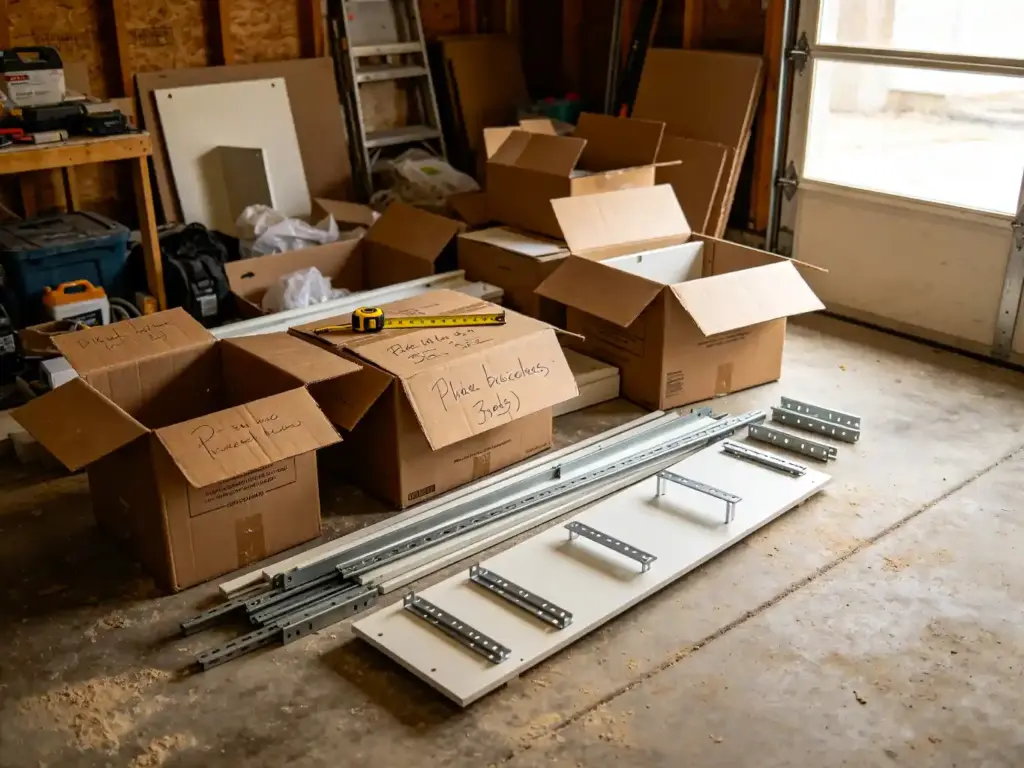
Palletised kitchen cabinetry is the fix most builders overlook. Walk onto any Australian residential site in March or November and you will see it: a double garage or a shipping container stacked to the roof with flat-pack cartons, a joiner sorting hinges on a dusty floor, and three weeks of programme gone before the first carcase is fixed.
Most tender pricing assumes cabinetry lands neatly. It doesn’t. A standard kitchen arrives as 8 to 14 loose cartons. Multiply that by a duplex, a triplex or a 12-unit townhouse package and you are looking at hundreds of boxes that have to live somewhere on a site that was never built for it.Most builders price the cabinetry itself, but forget to price the on-site storage, and Architecture & Design Australia confirms that site logistics are one of the top cost blowouts on multi-unit townhouse programmes.
The cost isn’t obvious. It is the joiner who spends two hours every morning hunting for a missing bracket. It is the panel scratched because it was leaning against a plaster wall. It is the water damage because cartons were opened in the rain.
What actually happens when cartons go missing
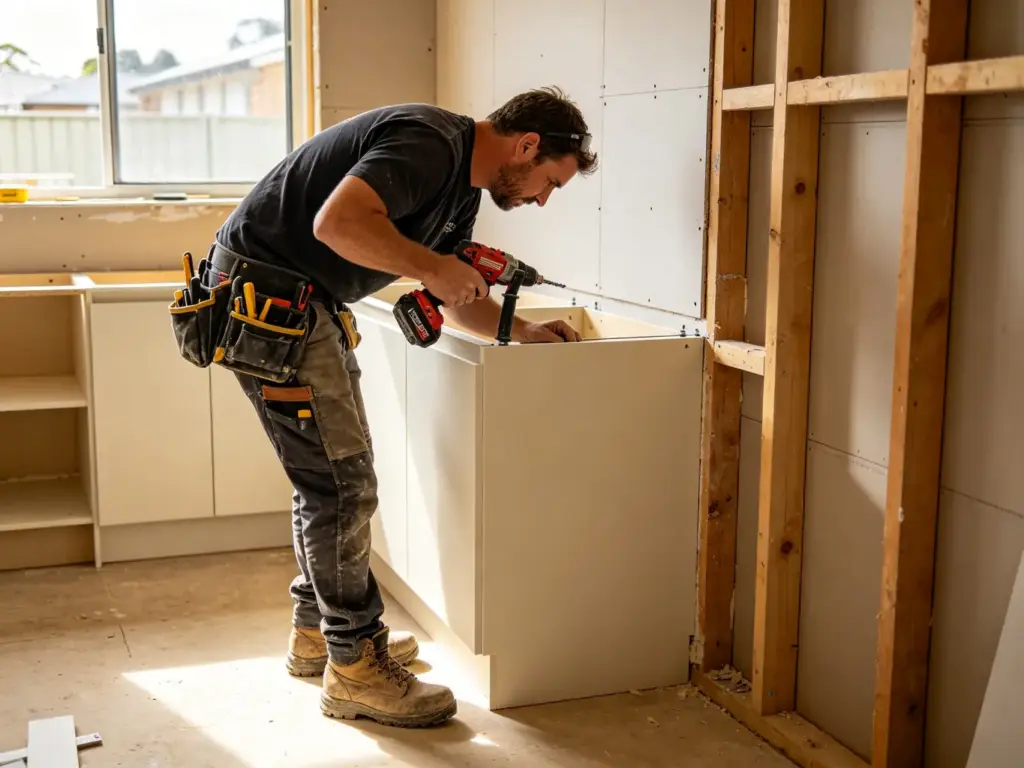
On a multi-unit job, one missing bracket doesn’t hold up one kitchen, it holds up the fit-out of that entire unit. The painter waits. The tiler waits. The handover date slips. The client reaches for their builder.
This is the quiet cost of treating flat pack kitchen cabinetry like a DIY retail product. flat panel melamine cabinetry is the format most Foshan factories pack for export.The component count is too high. The carton coding is too vague. The site team doesn’t have time to run a parts reconciliation every morning.
How palletised supply changes the site
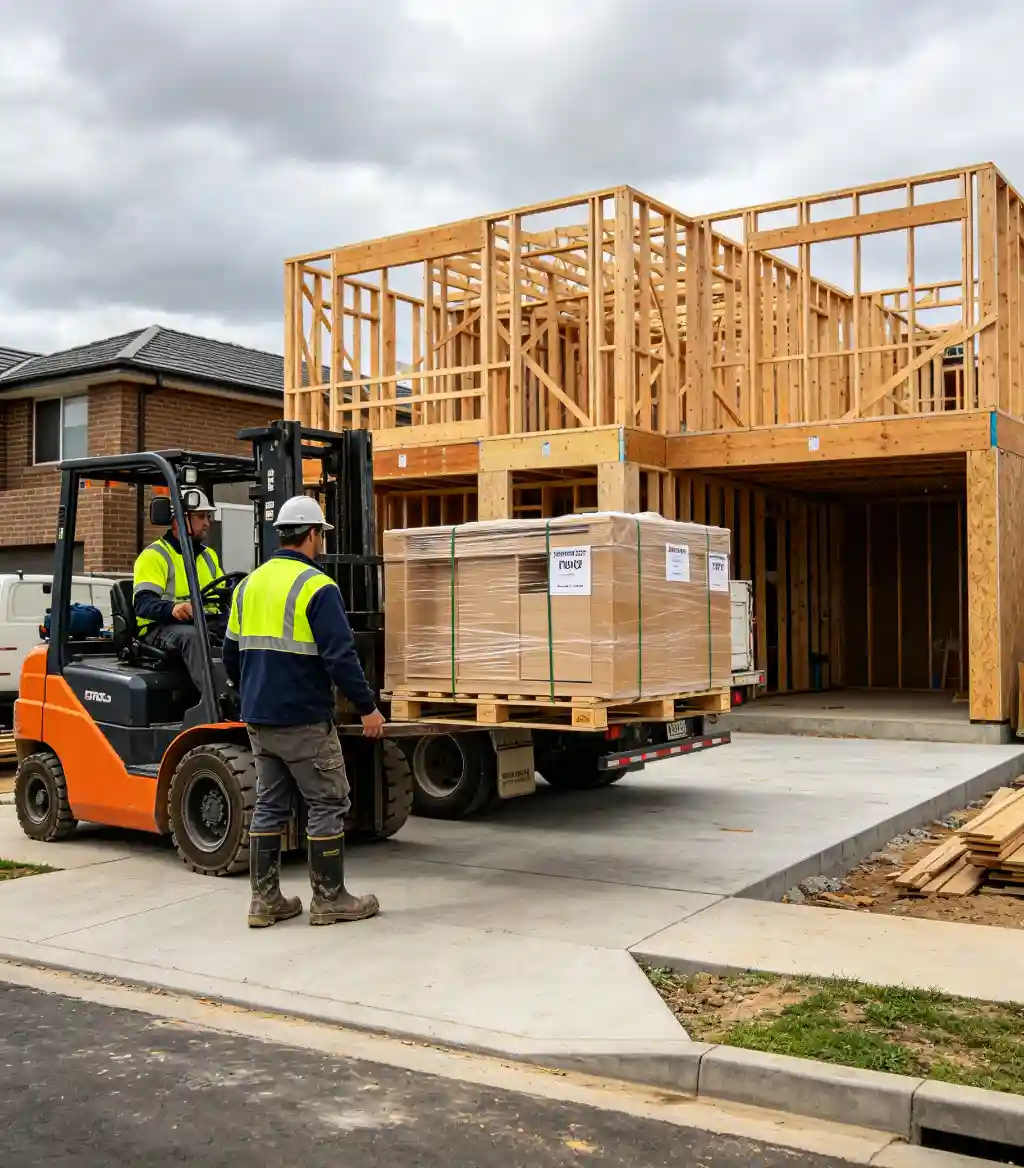
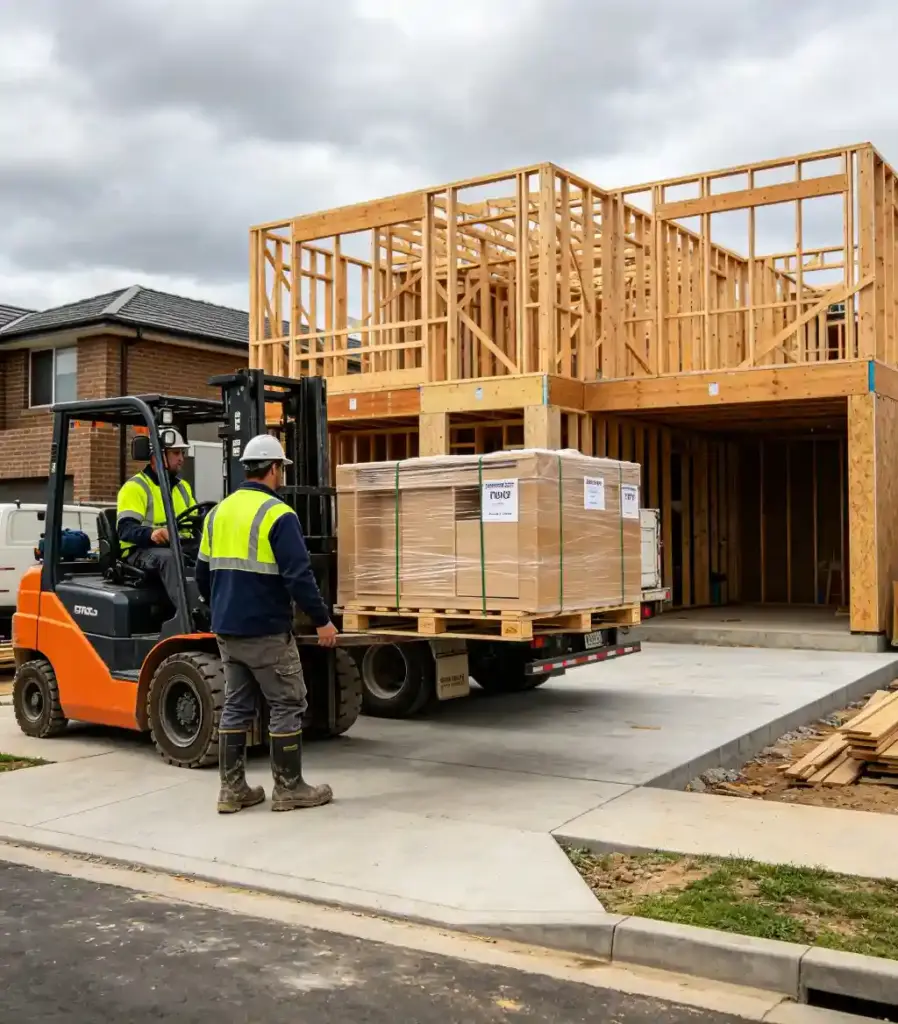
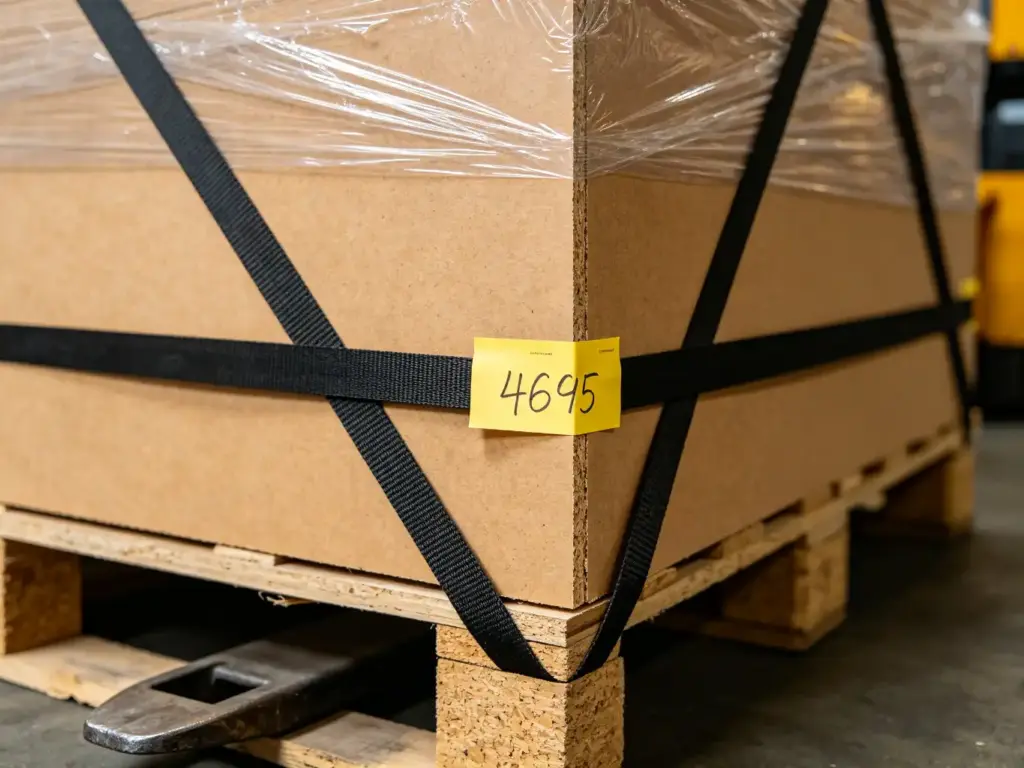
A Foshan factory that has run Australian programmes will pack the kitchen differently. Flat panel melamine cabinetry is assembled in the factory, fixed and checked, then strapped to its own pallet. Hinges, handles, fixing packs and kickboards are labelled to the unit number and taped to the same pallet. The whole unit shrinks to a forklift-sized footprint.
On site:
- Pallets go straight into the garage or a single shipping container, one per unit
- The joiner doesn’t sort cartons — each pallet is one complete kitchen
- Weather risk drops because nothing sits open on the floor
- You call off pallets unit by unit as the site is ready
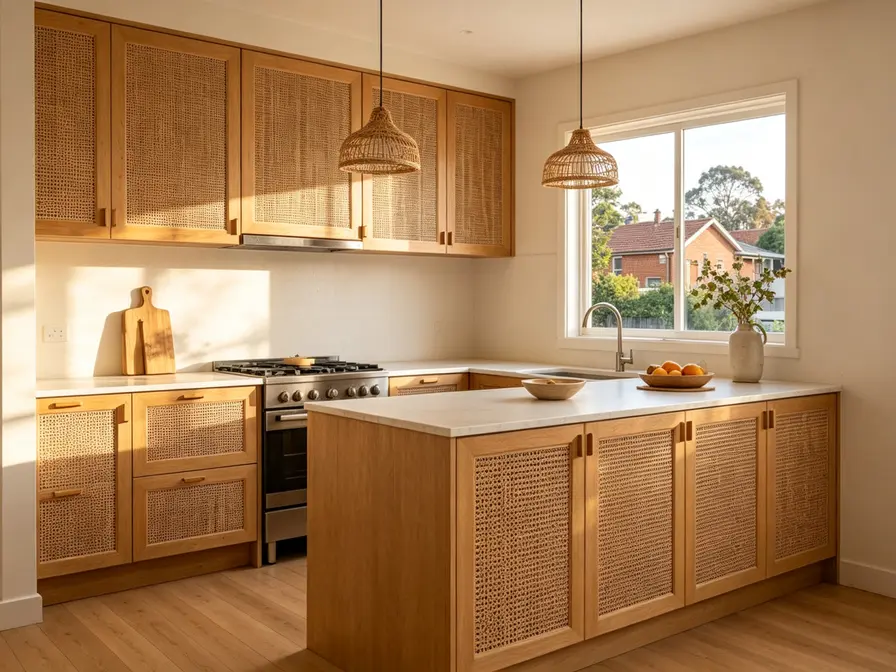
That is what palletised kitchen cabinetry actually means on an Australian site: not a different way of shipping, but a different way of organising labour. Browse our wood veneer cabinetry range to see finishes built for this supply format.
Why this matters more on multi-unit programmes
On a single renovation, storage waste is annoying. On a 20-unit development, it is a margin wipeout.
The job site doesn’t expand. The site shed doesn’t get bigger. But the cabinetry volume does. A supplier that understands Australian site logistics will pack for the site, not for a cheaper sea container rate. Our wood veneer cabinetry range is stocked in these palletised formats for multi-unit buyers.
What to ask before you accept a “cheaper freight” quote
Three questions. If the supplier can’t answer them cleanly, you are paying for a retail product on a commercial programme. Our light oak veneer cabinetry is one of the highest-volume finishes for Australian townhouse packages.
How do you handle a missing bracket three weeks after delivery?
Is the cabinetry pre-assembled in the factory, or flat-packed?
How is it packed for a tight Australian site — cartons, or strapped to pallets labelled by unit?
Our light oak veneer cabinetry is one of the highest-volume finishes for Australian townhouse packages.
Get a palletised cabinetry quote
Tell us the unit count, the door finish, and your delivery window. We’ll come back with a per-kitchen pallet specification, lead time and BOQ-style price through our builder joinery support programme.
About Author

We are a professional cabinet manufacturer based in Foshan, China, focusing on custom pre-assembled cabinets for Australian villa builders and renovation contractors. All our cabinet systems follow Australian construction standards. We offer integrated pallet packing, shop drawing service, custom curved panels and super-tall cabinet solutions. With more than 10 years of experience delivering projects to Australia, we help builders reduce on-site installation labour, prevent panel damage, shorten construction timelines and avoid contract penalties. We only work with bulk building project clients, not retail homeowners.
FAQ
How many cartons does a typical flat-pack kitchen arrive in?
A standard kitchen usually lands in 8–14 cartons. Multiply that by your unit count and you see why site storage becomes the bottleneck on townhouse programmes.
Does palletised supply cost more per kitchen?
The per-kitchen price is usually comparable, but you remove the on-site sorting, parts chasing and rework that flat pack quietly adds to your labour bill.
Can pallets sit outside in Australian weather?
Yes, when they are strapped and shrink-wrapped. The format is built to handle weather between the factory and the site, unlike open cartons.
Do you deliver direct to unit, or to a central warehouse?
Both. Most builders take direct-to-site. Developers on larger programmes use our forward warehouse and call off pallets as each unit is water-tight.
Does this work for single duplexes, or only big projects?
The palletised format works from a duplex upward. On smaller sites the storage saving is actually more valuable, because the garage is usually the working space.
Want to dive deeper? Read more from our blog
- Australian Builder Kitchen Joinery: Cut Labour Costs with 2 Cabinet Supply Options
- Grey Shaker Kitchen Cabinetry: The Hampton’s Look Australian Builders Keep Reordering
- Matte Navy Blue Kitchen Cabinetry: The Italian Transitional Look Coming to Australian Renovations
- Green Shaker Kitchen Cabinetry: The Two-Tone Look Australian Builders Are Specifying

- Renovation Kitchen Cabinetry: Keeping Knock-Down Rebuilds on Schedule
- Palletised Kitchen Cabinetry: Solving the On-Site Storage Crisis for Australian Builders