Australian builder kitchen joinery costs go well beyond the initial cabinetry quote. For builders, property developers and cabinet wholesalers, the cheapest kitchen cabinetry doesn’t always deliver the best project margin.
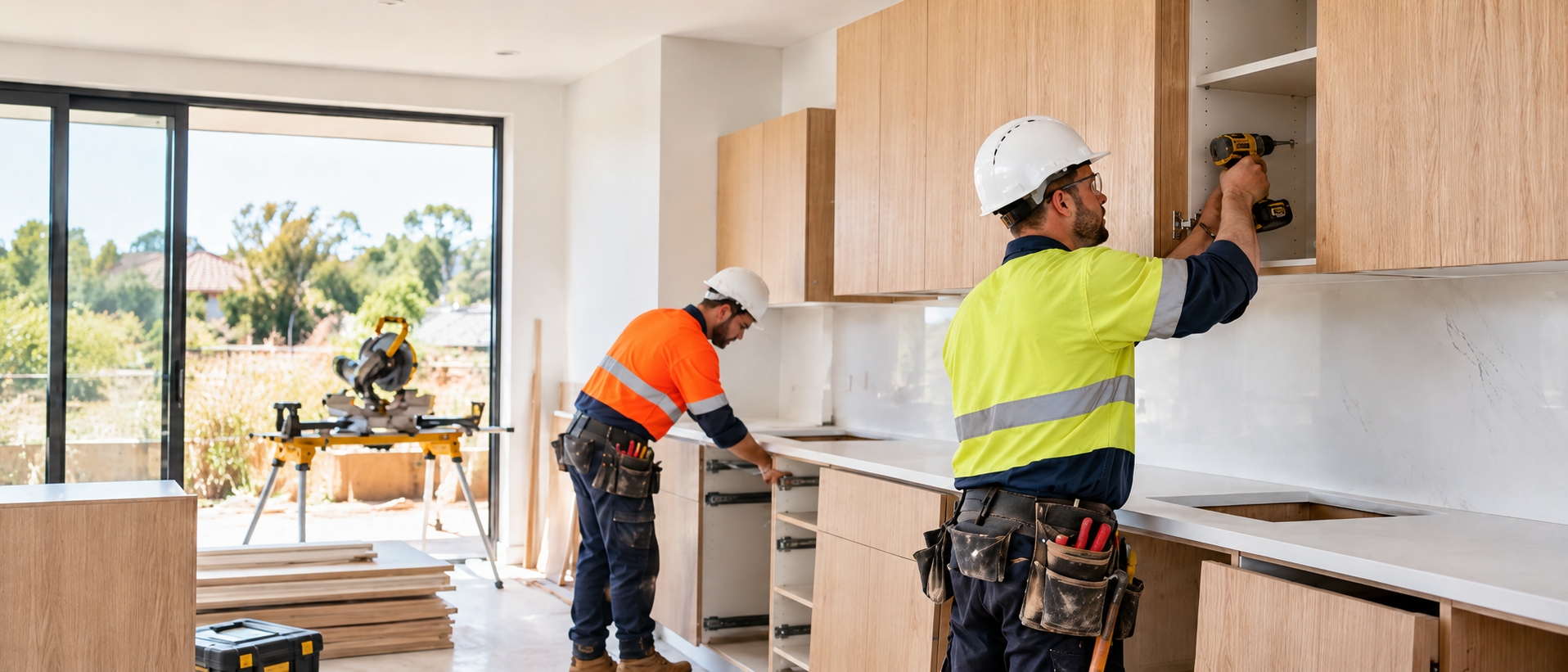
Between rising labour costs, tight handover deadlines and multiple trades competing for site access, assembling cabinets on-site can turn a competitive quote into a costly exercise.
Australian construction industry data and trends are available through the Australian Bureau of Statistics, providing useful context for project planning and cost management.
Whether you’re managing a townhouse development, apartment fit-out or renovation project, your kitchen cabinetry supply method directly affects labour costs, installation schedules and profitability.
That’s why we offer two export options for Australian projects: Reinforced Flat Pack and Pre-Assembled Palletised Cabinets.
Australian Builder Kitchen Joinery: The Hidden Labour Costs
The hidden cost of kitchen cabinetry for Australian builders often begins after the container arrives.
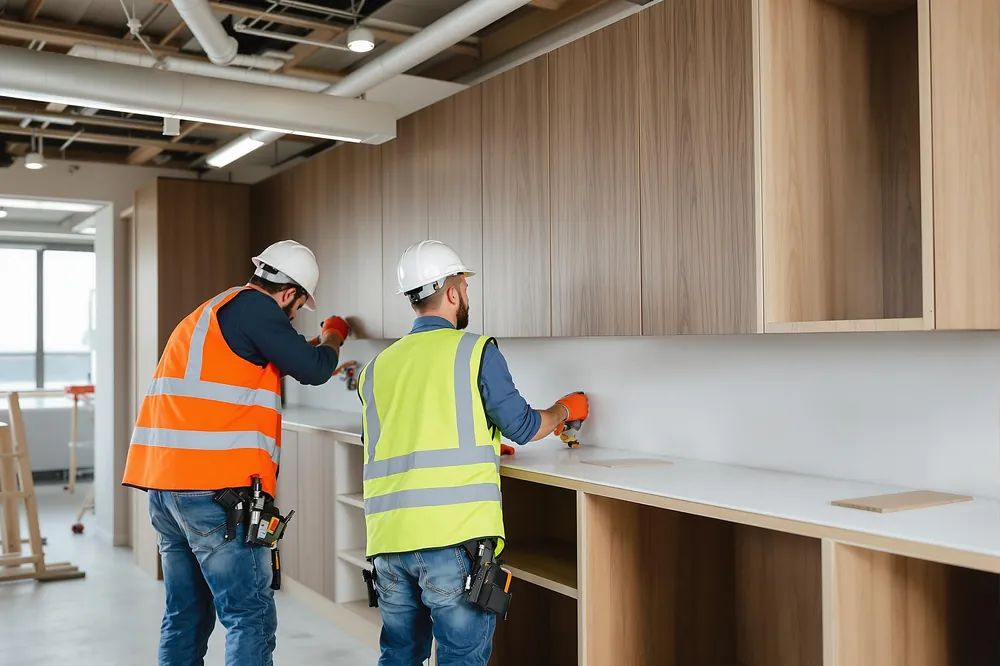
Flat-pack cabinets require unpacking, sorting, carcass assembly, hardware fitting and installation. Across multiple kitchens, those extra hours quickly add up.
For building contractors, excessive on-site labour costs can create:
- Higher installation expenses and budget blowouts
- Longer fit-out schedules and delayed handovers
- Extra handling, sorting and site coordination
- Greater pressure on already stretched tradies
The real question isn’t simply “What’s the cabinet price?” It’s “What’s the total landed and installed cost?”
For commercial kitchen joinery sourcing in Australia, packaging and assembly should be considered before placing a bulk order.
Two Kitchen Cabinetry Supply Options for Australian Projects
Option 1: Reinforced Flat Pack — Flexible Bulk Supply
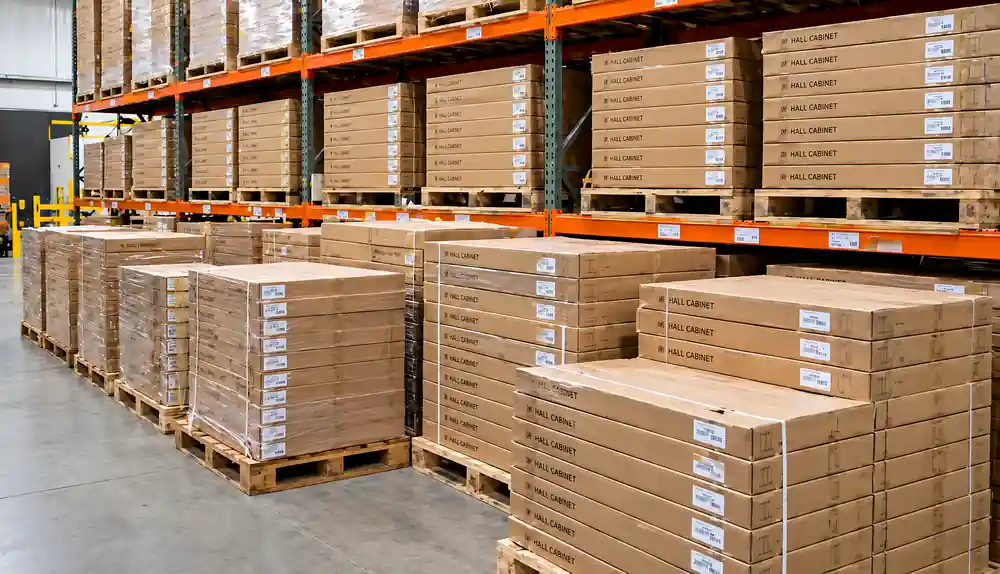
Our Reinforced Flat Pack option suits builders, wholesalers and developers who need efficient container loading, warehousing and staged project deliveries.
Cabinet components are packed for export, with protective materials and organised hardware to simplify handling and identification.
Best suited to:
- Multi-unit residential developments
- Cabinet wholesalers holding local stock
- Builders managing staged construction
- Renovation contractors with restricted site access
Flat-pack joinery disadvantages for building projects include additional assembly time and labour requirements. However, compact packaging can improve shipping efficiency and simplify storage.
For projects with available assembly crews and flexible schedules, reinforced flat pack offers a practical balance between freight efficiency and installation planning.
Option 2: Pre-Assembled Palletised Cabinets — Less Assembly, Faster Fit-Outs
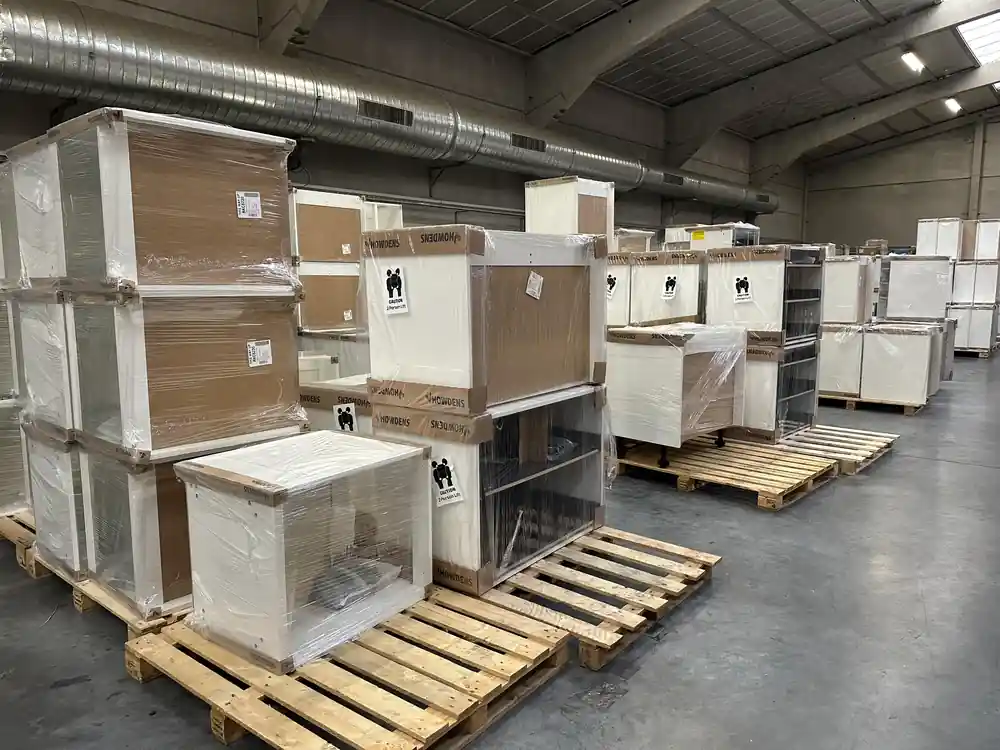
For builders facing tight programmes and expensive labour, pre-assembled kitchen cabinetry can make a significant difference.
Cabinet carcasses are assembled in our factory, with applicable fittings prepared or installed according to project specifications. Units are secured on reinforced pallets for export handling.
Once delivered to site, installers can focus on positioning, levelling, fixing and final fit-off rather than building every cabinet from individual panels.
Key benefits for Australian builders:
- Eliminate most on-site carcass assembly work
- Reduce time spent sorting panels and hardware
- Support faster kitchen and bathroom fit-outs
- Improve consistency across repeated unit layouts
- Reduce avoidable installation delays
Pre-assembled joinery benefits are particularly valuable for property developers managing multiple homes with the same cabinetry specifications.
For the right project, shifting assembly work offshore can free up local trades and help protect installation margins.
Which Cabinet Supply Method Protects Your Project Margin?
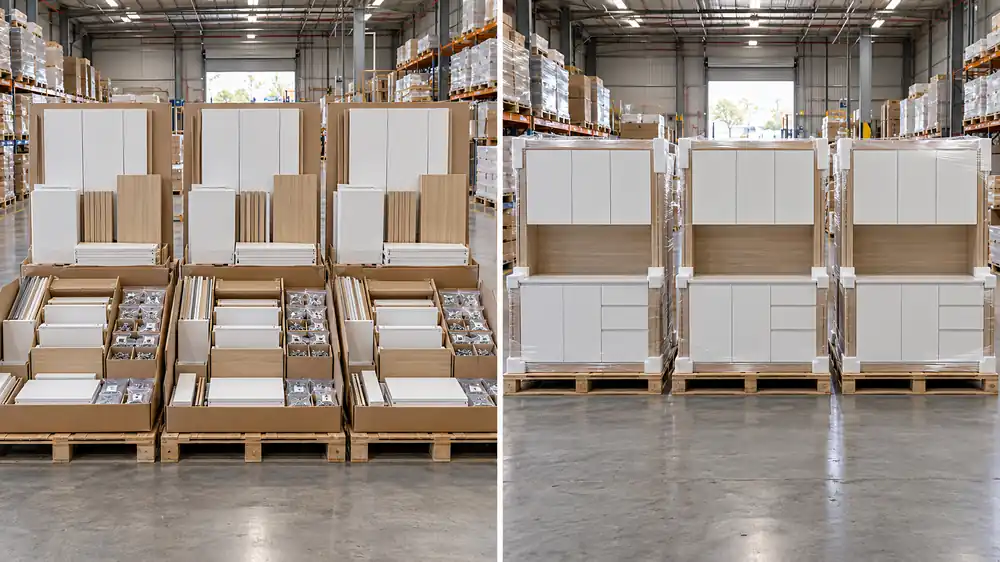
| Comparison | Reinforced Flat Pack | Pre-Assembled Palletised |
|---|---|---|
| On-Site Assembly | Required | Mostly completed in factory |
| Shipping Volume | Generally lower | Generally higher |
| Storage Space | More compact | Requires more space |
| Site Labour | More assembly labour | Less carcass assembly labour |
| Best For | Bulk stock and staged projects | Tight construction programmes |
| Key Priority | Freight and storage efficiency | Installation efficiency |
For a building contractor kitchen cabinet project in Australia, there’s no single supply method that suits every site.
Choose Reinforced Flat Pack when container efficiency, storage capacity and staged deliveries are priorities.
Choose Pre-Assembled Palletised Cabinets when reducing site assembly time and meeting demanding handover schedules matter most.
For multi-unit kitchen cabinet construction in Australia, compare both options using total landed cost, freight volume, site access, assembly hours and installation requirements.
Work with a Kitchen Cabinetry Factory That Understands Australian Projects
Not every China joinery factory offers the same export packaging, assembly processes or project support.
For Australian property developer kitchen joinery and renovation building joinery supply chains, reliable specifications and shipment planning are essential.
We support builders, contractors, developers and wholesalers with project-based kitchen cabinetry manufacturing and two flexible export options.
Planning your next Australian building project?
Send us your cabinetry drawings, project quantities and delivery requirements. We’ll help you compare Reinforced Flat Pack and Pre-Assembled Palletised Cabinets to find the more suitable supply method for your project.
About Author

We are a professional cabinet manufacturer based in Foshan, China, focusing on custom pre-assembled cabinets for villa builders and renovation contractors in Australia, North America (USA, Canada) and the Middle East. Our cabinet systems comply with respective local construction standards for each target market. We offer integrated pallet packing, shop drawing service, custom curved panels and super-tall cabinet solutions. With more than 10 years of cross‑border project delivery experience, we help builders reduce on-site installation labour, prevent panel damage, shorten construction timelines and avoid contract penalties. We only work with bulk building project clients, not retail homeowners.
FAQ
How much on-site labour can pre-assembled cabinetry save?
Builders on well-run multi-unit programmes typically report sharply lower on-site joinery hours compared with loose flat pack kits, because carcases arrive pre-fitted and your joinery team only does final fitting.
Is Foshan better than Fujian or Ningbo for Australian projects?
Foshan factories routinely build to Australian standards and understand tender rules and programme requirements. Fujian and Ningbo lines tend to suit simpler US-spec housing.
How is the cabinetry packed for sea freight?
Room-by-room pallet packing. Hinges, handles and screws for each kitchen are fixed to the same pallet as the cabinets, so nothing gets lost or mixed up on site.
Do you supply trade pricing to registered builders?
Yes. We provide spec sheets that fit straight into your tender BOQ, with trade-only pricing for repeat and multi-unit projects.
What lead times should I plan for?
Production plus sea freight is typically 30–45 days depending on the season. Lock your schedule early and we can stage deliveries around your programme.
Want to dive deeper? Read more from our blog
- Australian Builder Kitchen Joinery: Cut Labour Costs with 2 Cabinet Supply Options
- Grey Shaker Kitchen Cabinetry: The Hampton’s Look Australian Builders Keep Reordering
- Matte Navy Blue Kitchen Cabinetry: The Italian Transitional Look Coming to Australian Renovations

- Green Shaker Kitchen Cabinetry: The Two-Tone Look Australian Builders Are Specifying

- Renovation Kitchen Cabinetry: Keeping Knock-Down Rebuilds on Schedule
- Palletised Kitchen Cabinetry: Solving the On-Site Storage Crisis for Australian Builders